
The first Interdisciplinary Conference took place on 21 April 2023 at the Krakow Choreographic Centre – Nowa Huta Cultural Centre and served as a prelude to the 3rd edition of the Krakow Dance Festival. The guiding theme of both the festival and the conference revolved around the question of who dances and who is the main protagonist of a performance. How can a non-human body, an object, or a plant become an equal performer? Questions of what and who dances, as well as how and why they do so, can serve as a compelling point of departure for practices that grant agency to non-human objects on stage.
In the presentations, we focused on issues related to being on stage and the identity of the performer—who or what performs—and, ultimately, on the interconnections between body, object, subject, and thing. How is the performing object and subject defined in contemporary choreography? How do we experience the presence of normative and non-normative human and non-human bodies in dance?
Organizer: Nowa Huta Cultural Centre – Krakow Choreographic Centre
Coordinators: Pamela Bosak, MA; Karolina Graca
Academic supervision: Dr. Hanna Raszewska-Kursa, Institute of Art, Polish Academy of Sciences
Patronage: Didaskalia theatre magazine
Support: Department of Theatre and Drama and the Department of Performative Studies, Jagiellonian University
CONFERENCE PROGRAM
10:00 – 11:30 BODY–PLANTS. FUNGI, MONSTERS, MIMOSAS /
CIAŁO–ROŚLINY. GRZYBY, MONSTERY, MIMOZY
- Katarzyna Pastuszak – Shared Bodies – Choreographic Strategies of Encountering Fungi / „Ciała wspólne – choreograficzne strategie spotkań z grzybami”
- Magdalena Niedzielska – Time, Attentiveness, and the Agency of Plant Bodies in the Practice of Contact Improvisation with Schefflera arboricola and Monstera deliciosa / „Czas, uważność i sprawczość ciał roślin w praktyce kontakt improwizacji z Szelferą Drzewkowatą i Monsterą Dziurawą”
- Joanna Tarasińska – The Plant Dances. Dances Like a Plant / „Tańczy roślina. Tańczy jak roślina”
12:00 – 13:30 CASE STUDY. AI, EXCAVATOR, PRACTICE /
CASE STUDY. AI, KOPARKA, PRAKTYKA
- Aleksandra Czarkowska – The Directing Entity – Artificial Intelligence and the Artistic Creation Process, Based on the Performance Burza by Grzegorz Jarzyna and Weronika Murek / „Istota reżyserująca – sztuczna inteligencja a proces tworzenia sztuki na przykładzie spektaklu Burza Grzegorza Jarzyny i Weroniki Murek”
- Maciej Guzy – The Swan-Like Grace of Heavy Machinery. A Few Remarks on the Posthumanist Potential of Iza Szostak’s Excavator Ballet / „Łabędzia gracja ciężkiego sprzętu. Kilka uwag o posthumanistycznym potencjale Baletu koparycznego Izy Szostak”
- Aniela Kokosza, Paulina Giwer, Iza Chlewińska, Bartosz Mroczkowski – Dancing Mindfulness with Objects: Watching versus Experiencing (in) Motion / „W tańcu uważności z obiektami: oglądać a doświadczać (w) ruchu”
14:30 – 16:00 OBJECT–BODY. COSTUME, DECOCTION, INTIMACY /
OBIEKT – CIAŁO. KOSTIUM, WYWAR, INTYMNOŚĆ
- Dorota Morawetz – Costume and Its Agency in the Context of Scenic and Performative Practices / „Kostium i jego sprawczość w kontekście działań sceniczno-performatywnych”
- Jagna Nawrocka – The Body of Relation. Choreography of Specters / „Ciało relacji. Choreografia widm”
- Izabela Zawadzka, Katarzyna Waligóra – Choreographing Intimate Scenes in Theatre / „Choreografia scen intymnych w teatrze”
16:30 – 18:00 MORE-THAN-HUMAN. DOGS, ROBOTS, DEITIES /
WIĘCEJ-NIŻ-LUDZKIE. PSY, ROBOTY, BÓSTWA
- Zuzanna Kubiak – Dance for Non-Human Audiences. Choreographic Attempts to Transform Species-Based Subject–Object Relations / „Taniec dla nie-ludzkich odbiorców. Choreograficzne próby przekształcenia podmiotowo-przedmiotowej relacji gatunkowej”
- Marta Seredyńska – Human and Non-Human on Stage: On the Relationship Between Choreography and Robotics / „Ludzkie i nie-ludzkie na scenie – o relacji choreografii i robotyki”
- Zuzanna Kann-Skorupska – Who Dances? On Stage Presences in Classical Indian Dance / „Kto tańczy – o obecnościach scenicznych klasycznego tańca indyjskiego”
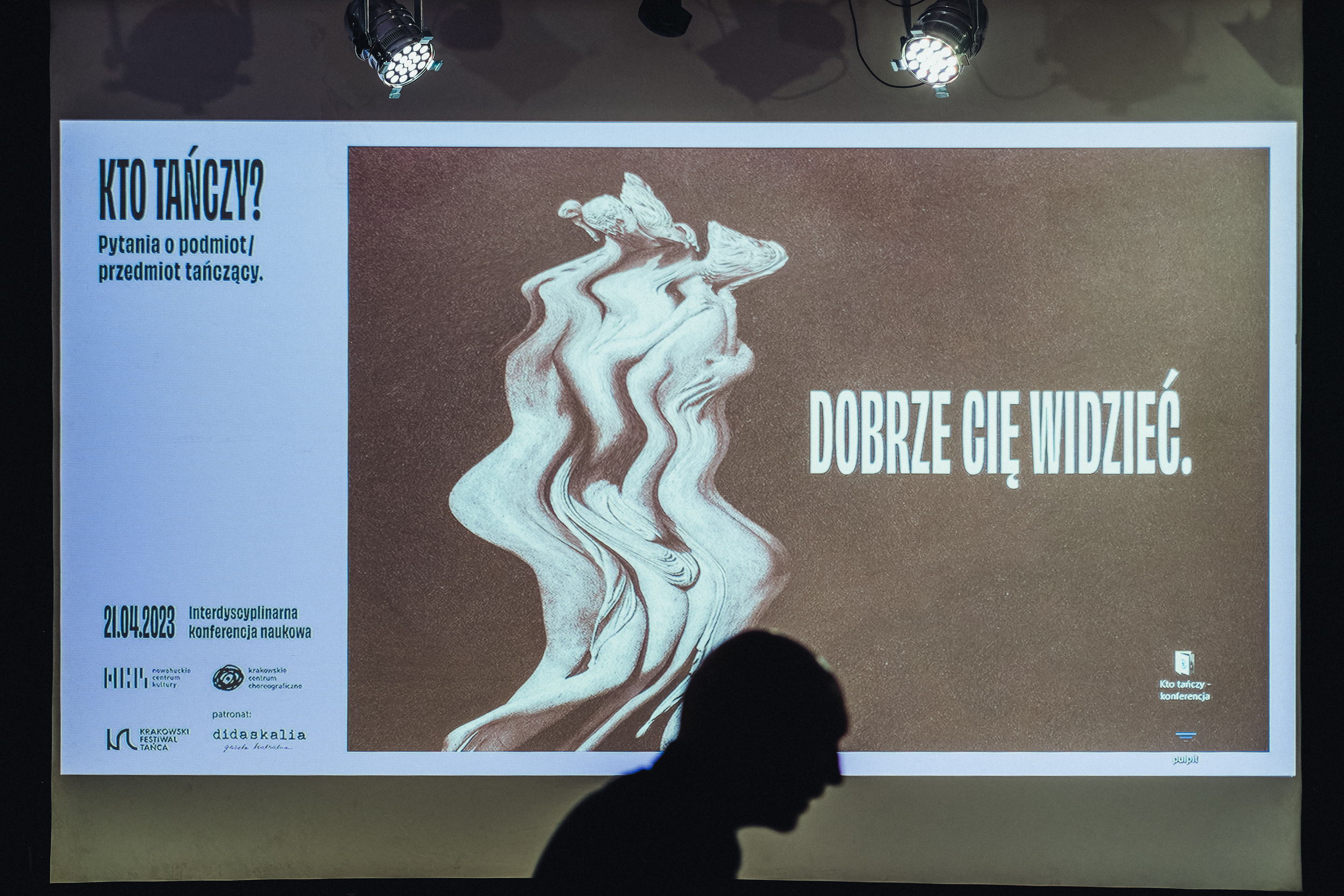
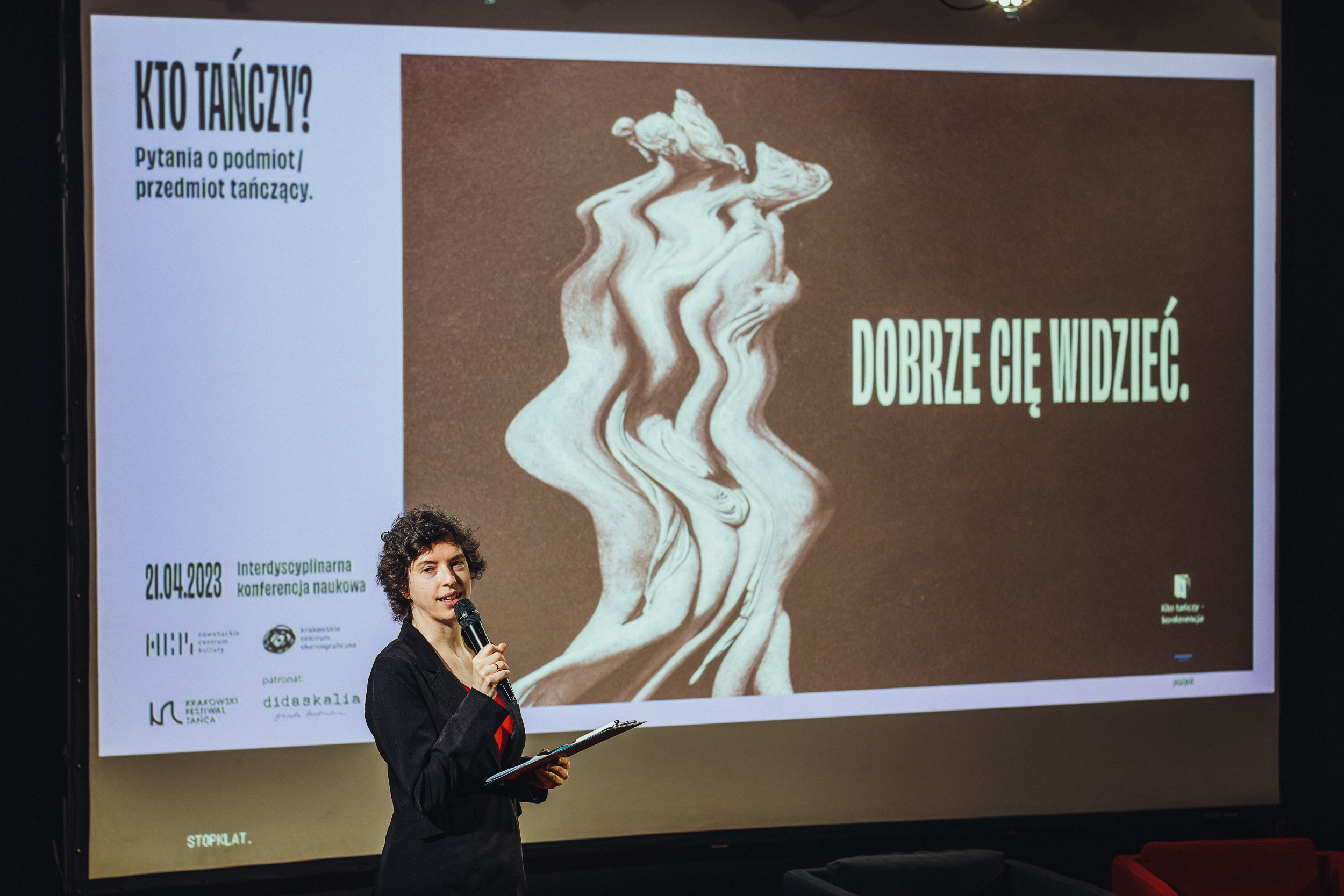
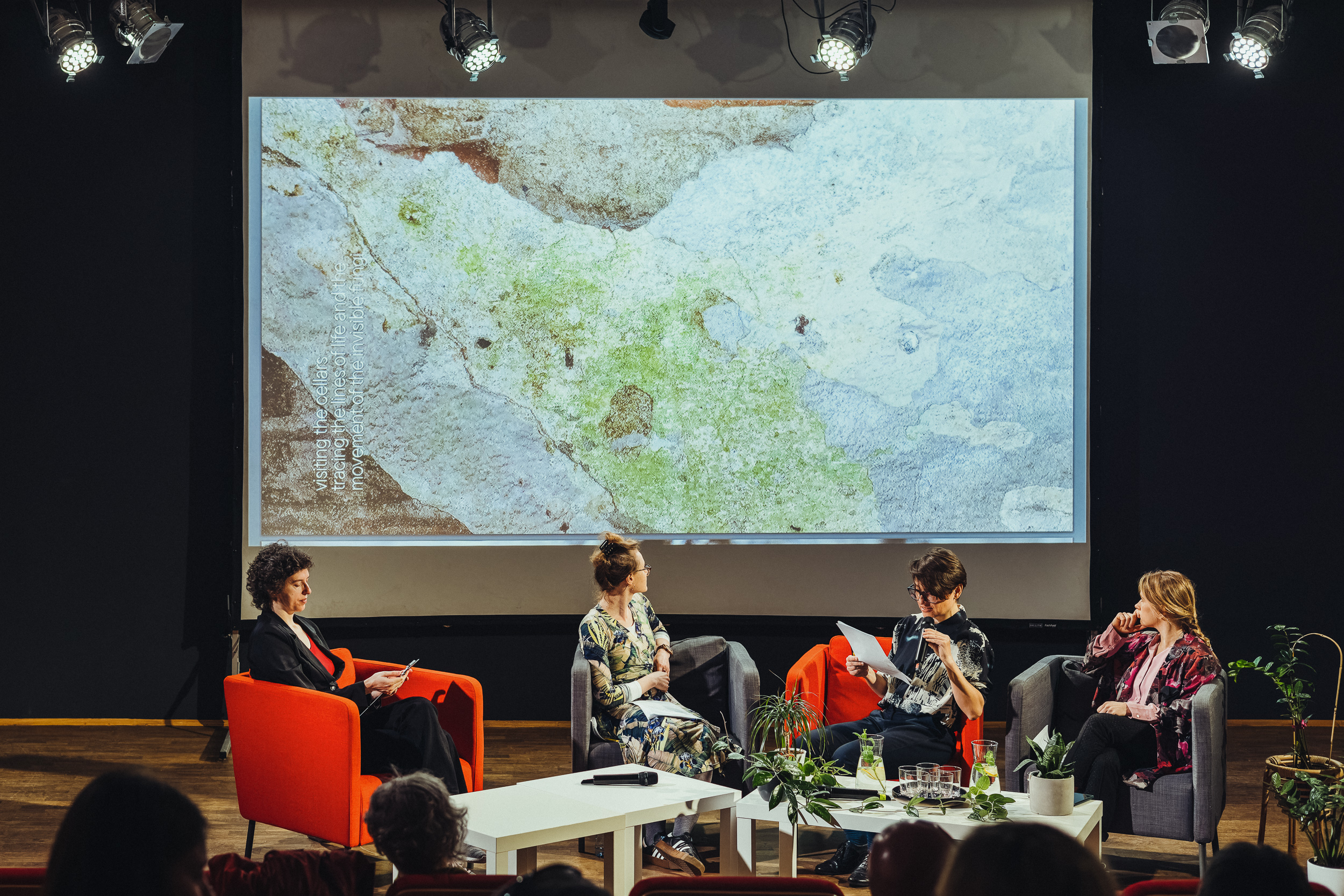
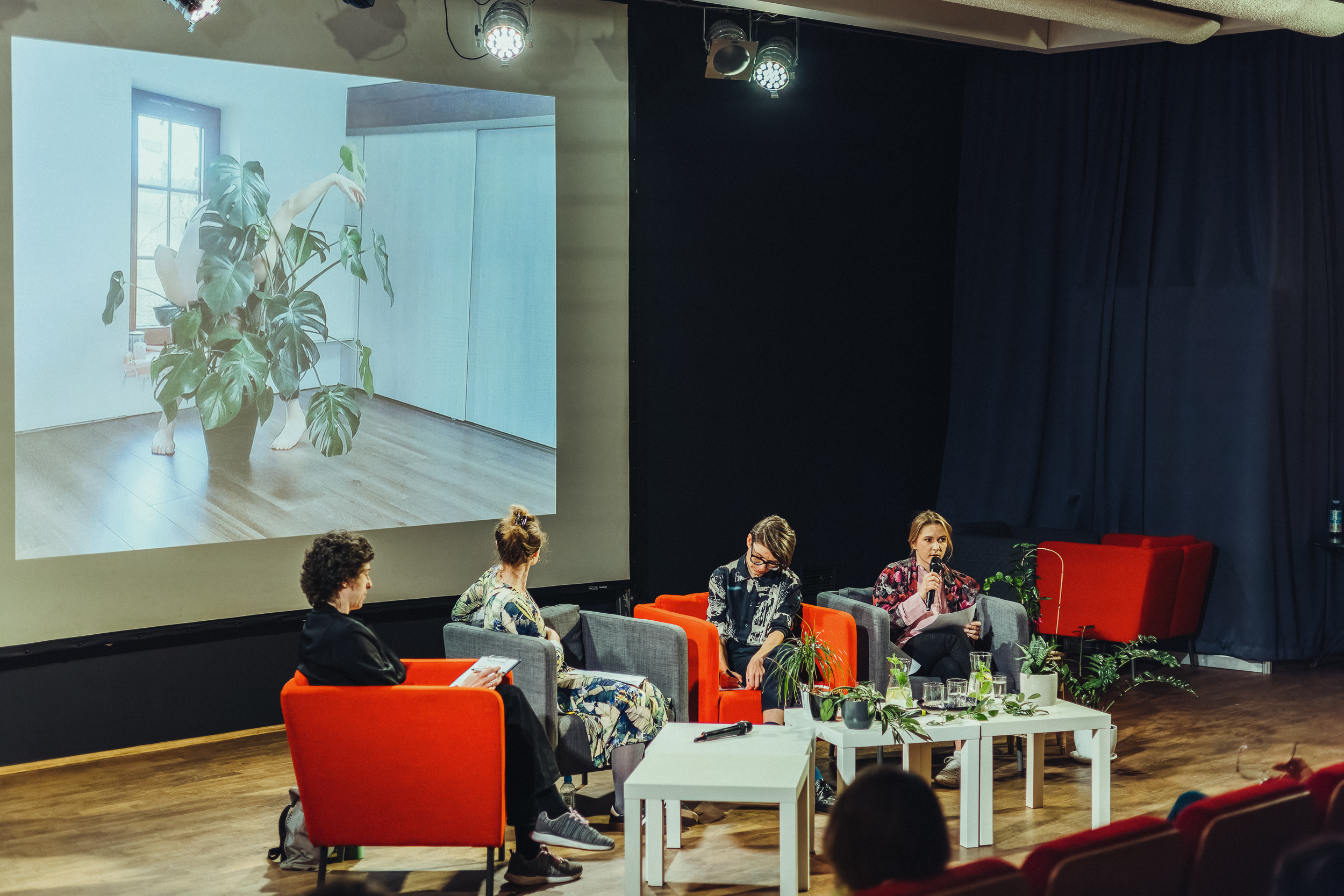
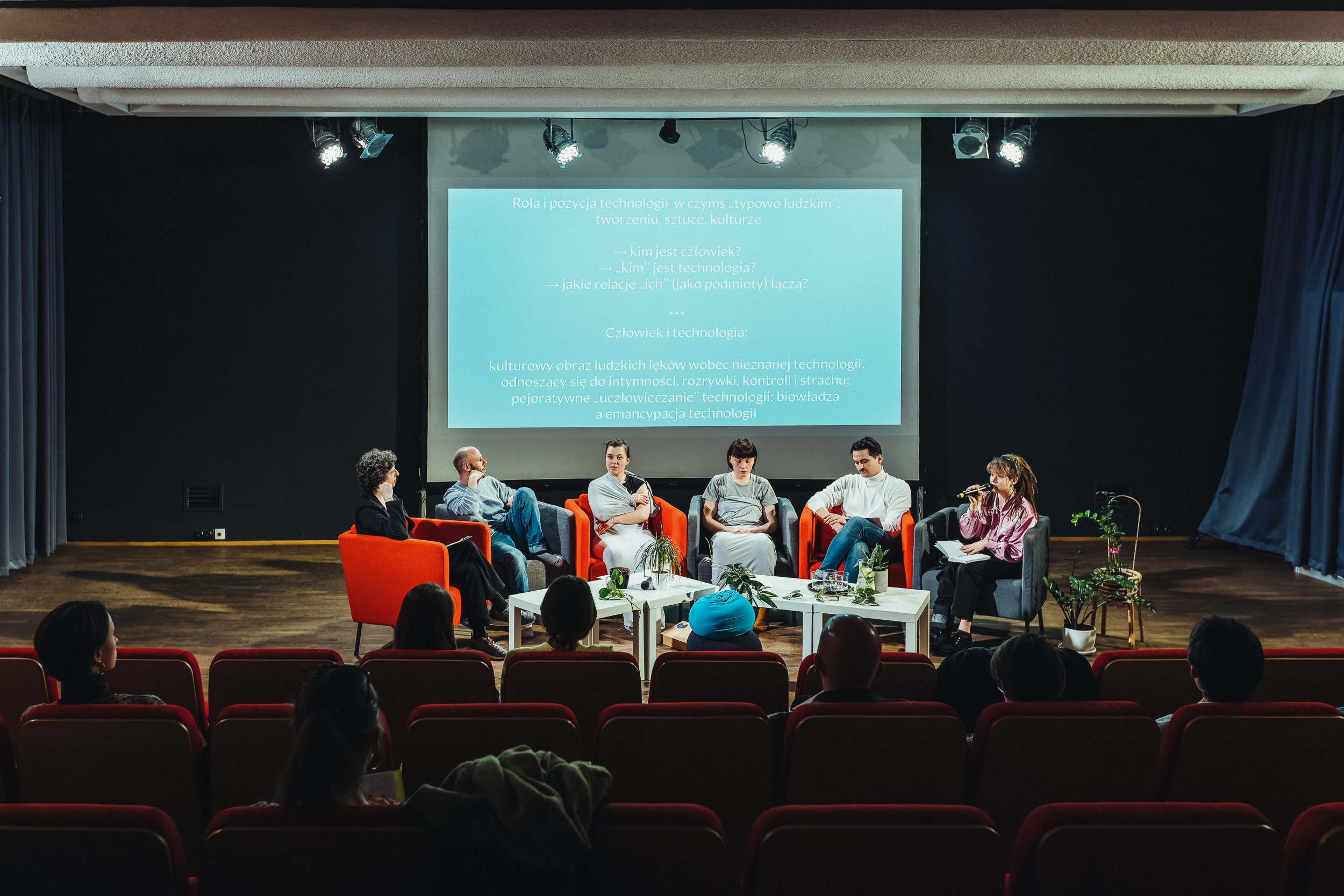
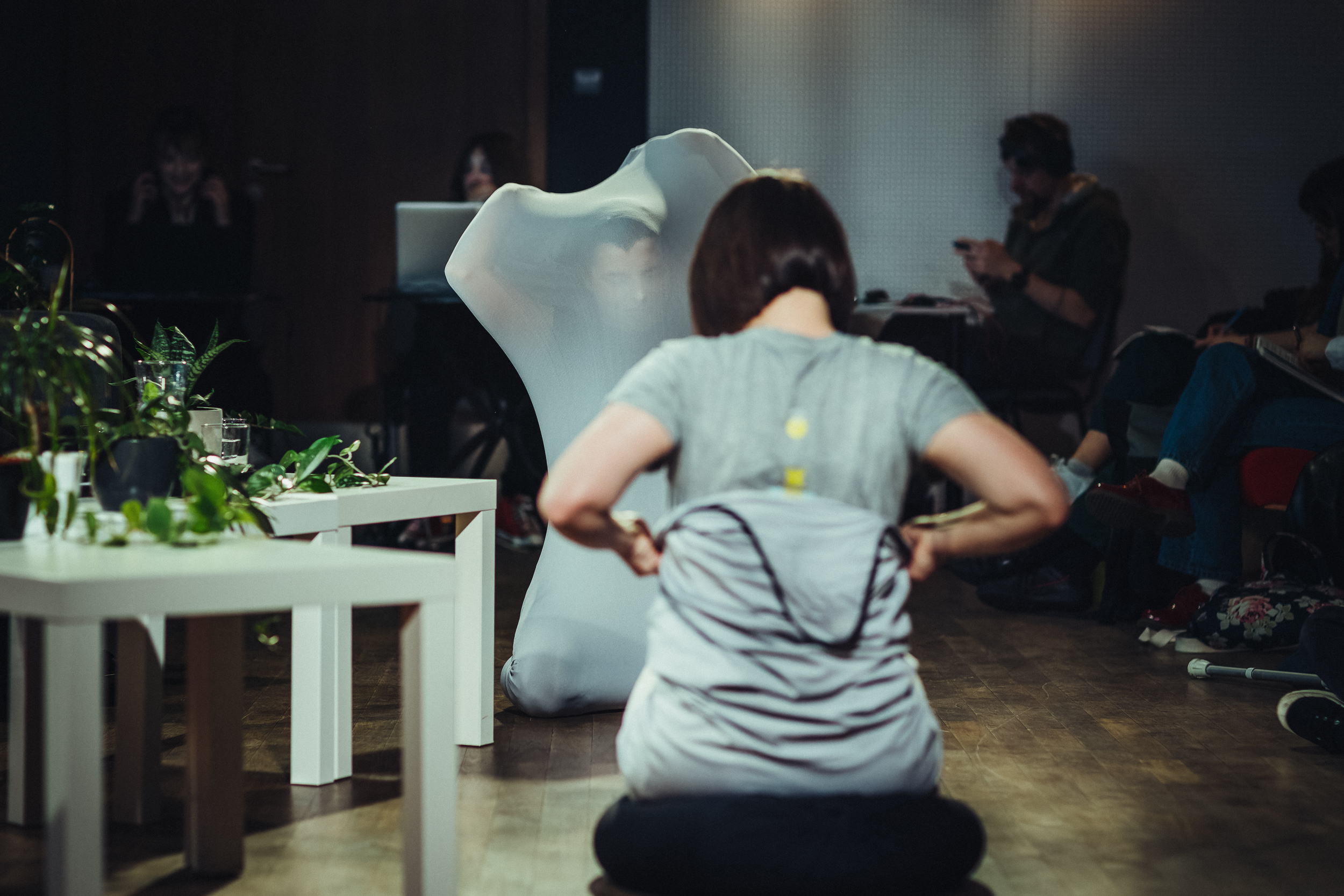
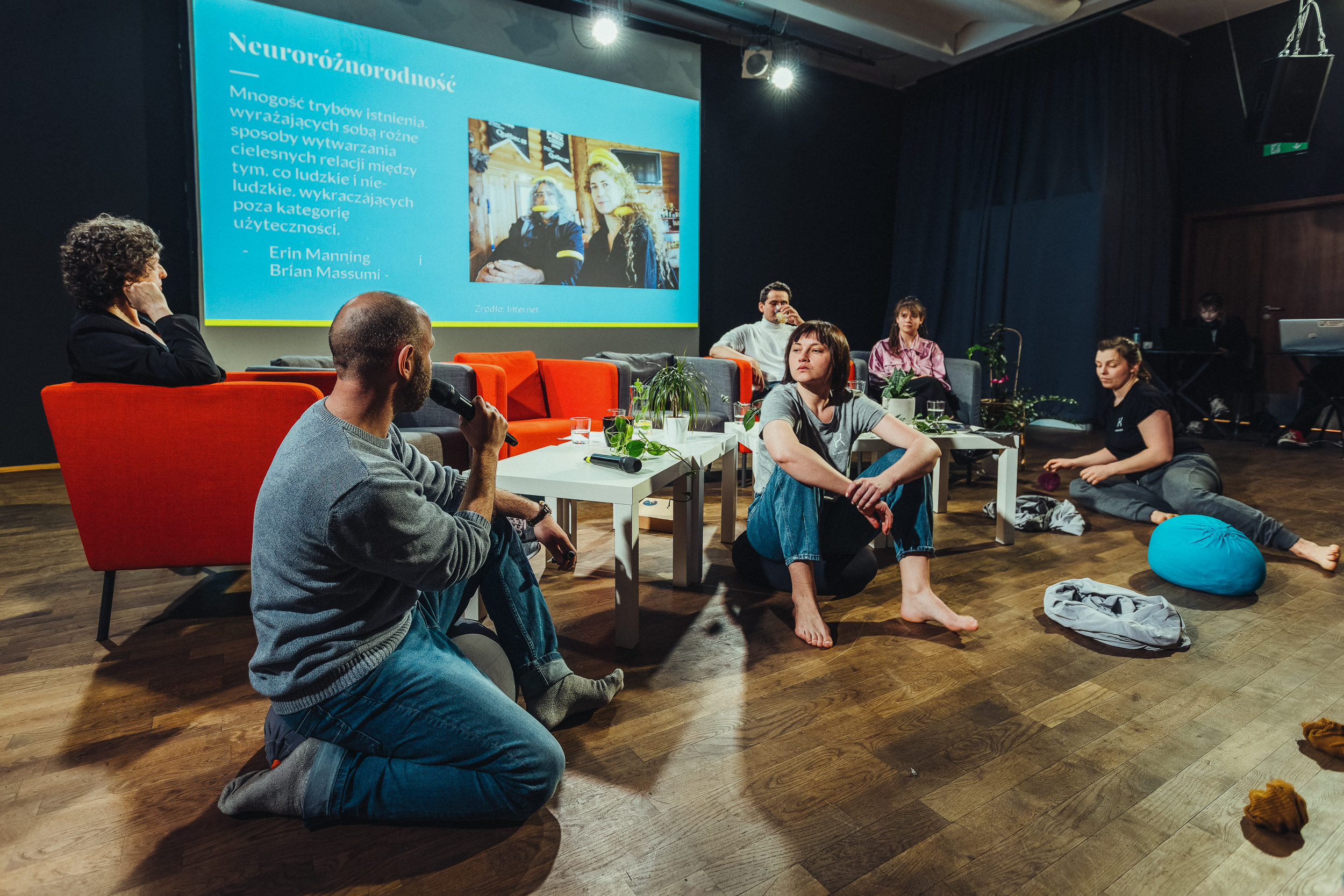
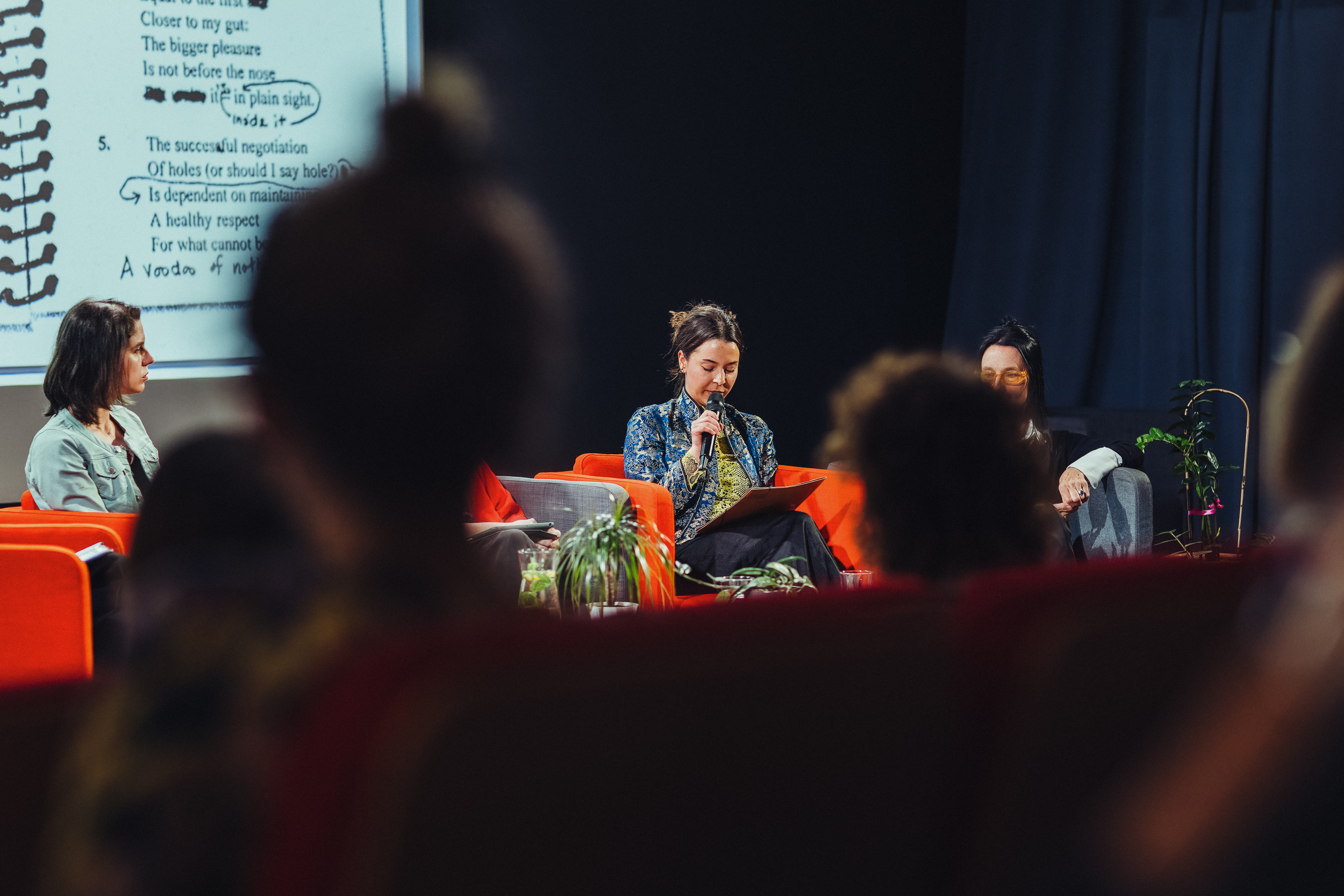
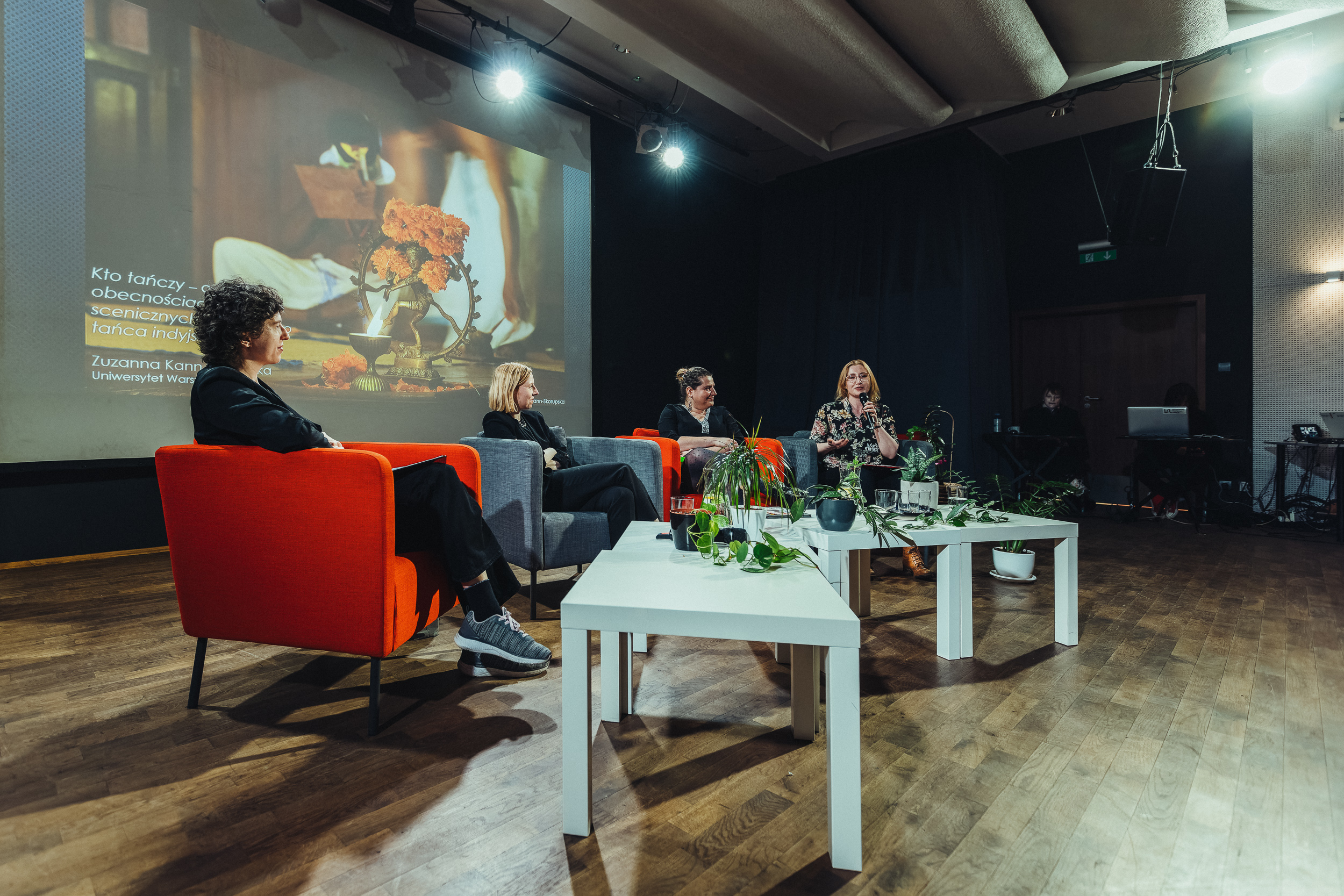
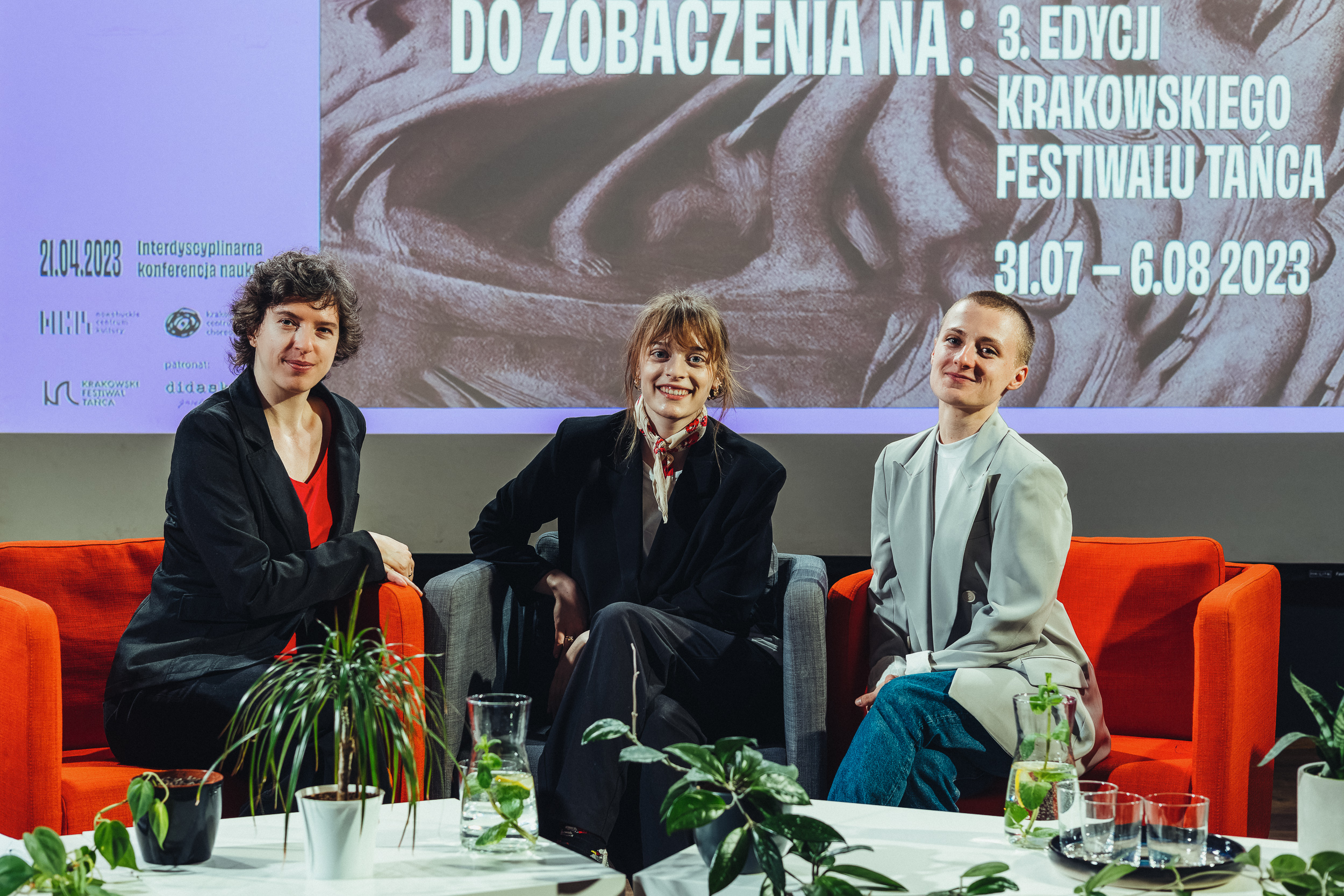
Photo: Robert Słuszniak